Fuelling the perfect marathon performance means considering your pre-event nutrition as well as taking the correct fuel sources on board at the right times during the marathon itself. We guide you through these areas, whilst also advising you on how to optimise your recovery once your mission is complete.
Having already covered Nutrition For Marathon Training in our previous article, here we consider the final part of the nutritional puzzle – fuelling your actual marathon!
A Clear, Evidence-Based Guide to Event-Day Nutrition
A marathon is as much a nutritional challenge as it is a physical one. While training develops your aerobic capacity, muscular resilience and efficiency, event-day fuelling determines whether those qualities can be sustained for the full distance. When performance unravels late in a marathon, the cause is rarely fitness. More often, it is inadequate fuelling (carbohydrate availability), poor hydration, or a fuelling strategy that was reactive rather than proactive.
The good news is that the most common event-day problems like hitting the wall, dehydration, gastrointestinal distress, and mental fatigue are largely avoidable. They are not inevitable consequences of running 26.2 miles, but predictable outcomes of poor preparation.
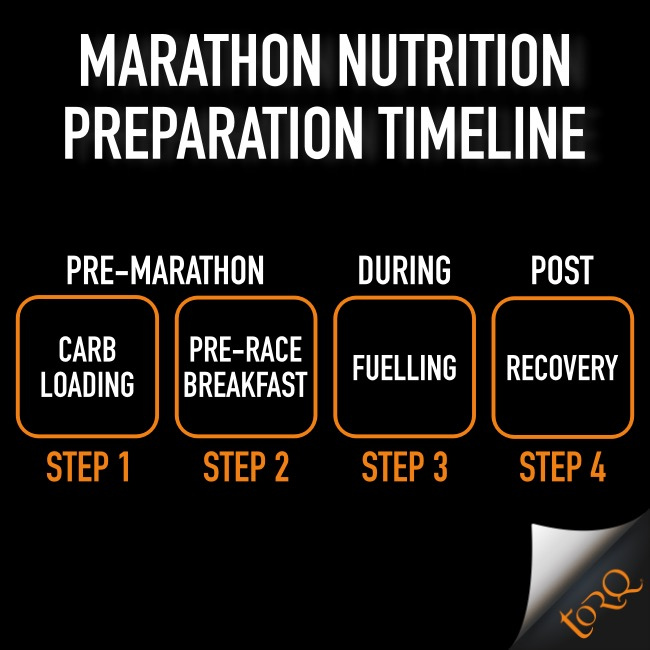
This article outlines a complete, practical event-day fuelling strategy. It follows the nutritional timeline from carbohydrate loading in the days before the event, through pre-event breakfast, fuelling during the marathon itself, the strategic use of caffeine, and finally post-event recovery. The objective is simple: remove uncertainty, reduce risk, and allow you to perform with confidence.
Carbohydrate and the Marathon: Understanding the Limitations
At marathon pace, carbohydrate is the primary fuel source. Although fat contributes to energy production, it cannot support the intensity required to maintain pace over long durations on its own. The body stores carbohydrate as glycogen in skeletal muscle and the liver, but these stores are limited.
As exercise intensity increases, the rate at which carbohydrate is used also increases. When glycogen availability falls below a critical threshold, several things happen simultaneously: perceived exertion rises sharply, pace becomes difficult to sustain, coordination declines, and decision-making deteriorates. This combination is what runners typically experience as “hitting the wall”.

Effective marathon fuelling therefore has two clear aims:
- Maximise glycogen availability before the event
- Slow the rate of glycogen depletion during the event
Every fuelling decision should support one or both of these goals.
Carbohydrate Loading: Building the Foundation
For the finer detail on carbohydrate loading, please refer to our Carbohydrate Loading Update article. Carbohydrate loading increases the amount of glycogen stored in the muscles and liver prior to the event. Starting the marathon with high glycogen availability extends the time before fatigue sets in and improves the ability to maintain pace, particularly in the final third of the event where performance often deteriorates.
Importantly, carbohydrate loading is not about overeating. It is a deliberate shift in dietary composition, prioritising carbohydrate while temporarily reducing nutrients that limit intake or slow digestion, such as fat and excessive fibre.
How Much Carbohydrate is Required?
In the final 24–48 hours before a marathon, a robust guideline is:
- 8–12 g of carbohydrate per kilogram of bodyweight per day
For a 70 kg runner, this equates to approximately 560–840 g of carbohydrate per day. While the upper end of this range may not be necessary for every runner, intakes below this range often fail to fully saturate glycogen stores. Smaller runners, recreational athletes, or those prone to gastrointestinal discomfort may perform well closer to 8–10 g/kg. Larger or highly trained athletes, or those approaching the event at higher intensities, may benefit from intakes toward the upper end of the range. The priority is not hitting a precise number but increasing carbohydrate availability.
During carbohydrate loading, aim for:
- 70–80% of total energy intake from carbohydrate
- Moderate protein intake
- Minimal fat intake

This allows high carbohydrate intake without excessive fullness. Choose carbohydrates that are easy to consume. Low-fat, lower-fibre carbohydrate sources are generally better tolerated. The TORQ Carb-Load food range, which includes high-carbohydrate breakfasts and meals, is specifically designed to support this phase by delivering large amounts of carbohydrate without excessive fat or fibre. If you’re struggling to consume enough solid food, you can utilise TORQ Energy Drink or TORQ Organic Energy – the invisible calorie.
Other useful carbohydrate sources include:
- Pancakes, cereal, TORQ Explore Flapjack
- Fruit juice, honey, jam
- Carbohydrate drinks like TORQ Energy Powder

Foods that might normally be considered “less healthy” can be entirely appropriate during this phase if they help achieve carbohydrate targets comfortably.
Hydration During Carbohydrate Loading
Glycogen storage is accompanied by water storage. Approximately 3 grams of water are stored for every gram of glycogen. As a result, effective carbohydrate loading often leads to a small increase in body mass. This is not a negative outcome, it reflects increased fuel and fluid availability and is part of the desired physiological state. As glycogen is utilised during the event, this water is gradually released and lost through sweat.

The Final Day Before the Marathon
The final 24 hours before event day should be calm, predictable and purposeful.
Priorities include:
- Maintaining high carbohydrate intake
- Staying hydrated (TORQ Hydration Drink)
- Minimising unnecessary physical and psychological stress
Some strategies involve a short bout of high intensity exercise the day before the event to enhance glycogen storage. While this approach has scientific support, it is not essential and should only be used by runners who tolerate intensity well and have practised it previously. For most athletes, a low-stress day focused on fuelling and rest is the more reliable option. Visit our carbohydrate loading article for more information on how to carb load effectively.

Pre-Event Breakfast: Restoring Liver Glycogen
Overnight, the liver uses glycogen to regulate blood glucose and fuel essential metabolic processes. By event morning, liver glycogen stores are often partially depleted. The purpose of the pre-event breakfast is to restore liver glycogen and stabilise blood glucose before exercise begins. The TORQ Pre-Race Breakfast is perfect for the morning before a race and meets these requirements
Muscle glycogen, once stored, remains available until it is used during exercise. Liver glycogen, however, is dynamic and must be replenished on event morning. Aim to eat 3–4 hours before the start of the event. This allows sufficient time for digestion and reduces the risk of gastrointestinal discomfort.
A practical target is:
- 1–2 g of carbohydrate per kg bodyweight
- 20–25 g of protein, easily digestible
- Low fat, moderate fibre
For a 70 kg runner, this equates to 70–140 g of carbohydrate.
Practical breakfast examples and suitable options include:
- TORQ Pre-Race Breakfasts
- Porridge with banana or syrup
- Beans on toast
- Pancakes with a carbohydrate-rich topping

If nerves suppress appetite, liquid carbohydrate sources like TORQ Energy Powder can be used to supplement or replace solid food. The priority is carbohydrate availability, not food volume.
Pre-Event Hydration: Starting in Balance
Running limits the amount of fluid that can be comfortably consumed during the event. As a result, starting the marathon well-hydrated provides a meaningful advantage.
A simple, effective approach includes:
- Monitoring urine colour in the hours before the event (aim for pale)
- Sipping ~500 ml of TORQ Hydration over the 2–4 hours before the start
- Adjusting intake based on body size, conditions and individual needs
The goal is hydration balance, not excess. Over-drinking immediately before the start often increases discomfort without improving performance. Hydration is responsible for a whole number of factors that will our influence performance, such as thermoregulation, cardiovascular capacity, cognitive performance and intestinal absorption. We discuss these in detail in our Hydration: The Definitive Guide article.
Fuelling During the Marathon: Protecting Performance
During marathon running, carbohydrate is used faster than it can be absorbed from the gut. However, consuming carbohydrate during the event provides an external fuel source that reduces reliance on stored glycogen. This is how event-day fuelling extends endurance and preserves pace.
Fuelling should be planned, proactive and consistent.
Begin fuelling early. Many runners benefit from taking their first carbohydrate source at the start or within the first 10–15 minutes of running. Early fuelling ensures carbohydrate is available before glycogen depletion accelerates.
Waiting until fatigue appears is already too late.
How much carbohydrate per hour?
The TORQ Fuelling System makes this simple, as easy as 1, 2, 3. Every TORQ fuelling product contains 30 g of carbohydrate (1 TORQ Unit) and evidence supports intake targets of 60-90g per hour (2-3 TORQ Units), but rather than thinking in grams it is often easier to think in regular timing intervals. One serving every 20-30 minutes. Whilst we would always recommend trying to take on 60 – 90 g/h, 30 g is always better than nothing! The TORQ Fuelling System includes 4 of our products, Energy Drink, Jellies, Bars, and Gels.
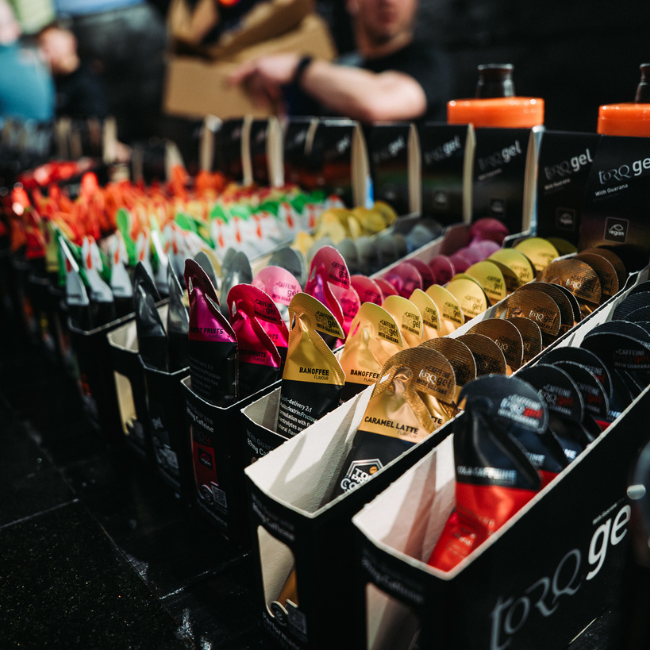
Gels are the most popular option for marathon runners due to their convenience, but after this we would recommend the Jellies and Energy Drink.
Successful event-day fuelling does not rely on feel or motivation. It relies on routine; fuelling should be almost automatic. Use time, distance, or aid stations as cues and remove decision-making wherever possible. You can also set most smart watches to notify you every 20-30 minutes as a reminder to fuel. The other article well worth reading is our Training Your Digestive System article, because although the research supports ingestion rates of 60-90 grams of carbohydrate per hour, you should always give yourself the best chance of success and practice fuelling during training.
Consistency matters more than perfection.
Hydration During the Marathon: Responding to Conditions
Hydration needs during a marathon vary widely and are influenced by temperature and humidity, clothing and sun exposure, pace and body size, and individual sweat rate. As a result, hydration strategies must be adaptive rather than rigid. We appreciate that controlling hydration can be difficult and highly dependent on water stations, so we’d recommend making use of every aid station available. Another important point to note, as explained in our Hydration Guide is that a good state of hydration is critical to the absorption of your fuel (gels), Slightly more detailed advice is below.

In most conditions:
- Use aid stations regularly to take on water
- Drink small amounts of an electrolyte drink like TORQ Hydration frequently – carry your own bottle
In hotter conditions:
- Significantly increase water intake at aid stations
- Carry more concentrated electrolytes via a rich mix of drink like TORQ Hydration to support fluid balance alongside the water at aid stations
- Be prepared to adjust carbohydrate intake slightly if fluid intake rises significantly
Gastrointestinal Comfort
Dehydration increases the risk of stomach discomfort and impairs carbohydrate absorption. If gastrointestinal symptoms occur:
- Pause carbohydrate intake briefly
- Focus on fluids
- Resume fuelling once symptoms settle
Calm adjustments are often sufficient to restore tolerance and maintain overall intake.
Late-Stage Caffeine: A Tactical Tool
Caffeine can reduce perceived exertion, improve alertness and elevate mood during prolonged exercise. Its effects are individual, so it should always be tested in training.
Timing Caffeine Effectively
Caffeine typically reaches peak blood concentration around 40 minutes after ingestion. A practical approach is to time caffeine intake so its peak effect coincides with the most demanding phase of the event.
For example, in a 4-hour marathon where fatigue typically rises around hour 3, caffeine intake around 2:15–2:30 may be appropriate. Caffeine has a long half-life, so taking it slightly early will still be sufficient.
89mg of caffeine can be found in each of TORQ’s Energy Gels (with guarana). 4 flavours are available and they are distiguished by their metalic packaging. This is a significant and highly noticeable dose of caffeine. To learn more about caffeine, its effects on exercise performance and how to accurately determine your caffeine dosing quantities, we highly recommend exploring the information found in our How Can Caffeine Boost Performance article.
Post-Event Recovery: Starting the Repair Process
Recovery begins immediately after finishing the event, not later in the day.
Within the first 15–30 minutes, aim to consume:
- Carbohydrate to initiate glycogen restoration
- Protein to support muscle repair
- Fluids and electrolytes to restore hydration
This early intake supports immune function and accelerates recovery. The TORQ Recovery Drink was designed exactly for this purpose. This will also help you cope with the celebratory pint or glass of wine later too!

The Days After the Marathon
It’s fair to say that the recovery from such a big event will take days, possibly weeks as a marathon imposes significant stress upon the body. During this period:
- Maintain regular meals
- Prioritise carbohydrate intake
- Consume 20–25 g protein per meal or snack
- Include fruits and vegetables for micronutrient support
- Prioritise sleep and hydration
Your appetite is likely to be elevated anyway for a few days, so just listen to your body and eat plenty of fresh fruit and vegetables and ensure that you’re getting regular intakes of 20-25g of protein as this will significantly hasten the repair process. We cover the importance of protein in detail in our article Protein, Performance & 20-25g Protein Recipes.
Carrying Your Nutrition: Making the Plan Work
A fuelling strategy is only effective if it can be executed comfortably. Long training runs should be used to practise:
- Carrying fuel
- Drinking while running
- Fuelling at event intensity
Common options include waist belts, pockets, lightweight vests and handheld bottles. If something causes discomfort in training, it will be magnified on event day. Solve these issues early.
When it comes to looking at ways to carry your nutrition, we thought that we would get some expert advice from a #TORQFuelled GB representing & British Ultra Trail Champion (2021), Meryl Cooper. Meryl is currently a high performing athlete and run coach, who has worked with TORQ over a number of years to optimise her own nutritional strategies and of course had to overcome all of the challenges you are likely to face as you prepare for your marathon.

Bringing it all Together
Effective marathon fuelling can be summarised into four stages:
- Carbohydrate loading to maximise glycogen availability
- Pre-event breakfast and hydration to stabilise energy and fluids
- Consistent fuelling and adaptive hydration during the event
- Immediate recovery nutrition to support repair and immune function
When these elements are planned, practised and executed calmly, event day becomes predictable rather than uncertain.
A marathon is demanding, but it should never be a nutritional gamble. Fuel well, and you give your training the opportunity to deliver the performance it has prepared you for on the day of the event.
Trying TORQ?
If you’re interested in purchasing TORQ products, we strongly advise training with them first, so that you can be 100% confident with your marathon day strategy. The easiest way to sample our products is to choose individual items from our ‘Build a Sample Pack’ page on this website:
Alternatively, TORQ products are widely available from the following stores:
Runners Need
Up & Running
Run4it
Inov8
Northern Runner
Accelerate UK
Running Form
Sainsburys (selected stores)
Listen to Our Podcast
If you enjoyed reading this article, why not listen to our podcast on the subject? The main subject of the podcast is about getting your nutrition right whilst training for your marathon, but we do cover event day nutrition too.
Apple Podcast: Nutrition for Marathon Training – Click HERE
Spotify Podcast: Nutrition For Marathon Training – Click HERE
YouTube Podcast: Nutrition For Marathon Training – Click HERE or hit ‘play’ below…

If you have any questions about this article or any other subject, please don’t hesitate in contacting us at enquiries@torqfitness.co.uk or phone 0344 332 0852.