Preparing for a marathon is just as much about what you eat as it is about what you do with your training shoes. You can follow the perfect training plan, hit every session and still arrive at an event feeling flat and frustrated, simply because you didn’t give your body the right training nutrition.
In this article you’ll learn why nutrition matters, how to fuel your training and how the TORQ Fuelling System can help you. We’ll explain complex ideas in simple language and share the confidence that comes from understanding not just what to do, but why it works. This isn’t a fad diet. It’s a strategy. Science backed, performance-driven and designed to help you perform your best in training and on marathon day.
The Foundation: Macronutrients
When you think of eating for training, do you think of calories, what a healthy meal is, or are you unsure? To truly fuel marathon training, you must understand the main food groups, known as macronutrients, each playing a pivotal role in our biological function. The three macronutrients are carbohydrate, protein and fat. These food groups provide energy, assist in the post exercise recovery process and help us maintain overall health, keeping us free from illness. We’ll look at each one in turn.
Carbohydrate: Your Primary Fuel
The main role of carbohydrate is to provide your working muscles and major organs with fuel to function. Carbohydrates are broken down to produce ATP, the energy currency of our cells, during exercise. As intensity increases the demand for carbohydrate also increases.

Carbohydrates are commonly categorised into two forms, simple and complex. Simple carbohydrates are short chain carbohydrate molecules which are sweet and found naturally in foods like fruit and honey. Regular sugar, also a simple carbohydrate, is added to processed foods for sweetness. These tend to have a bad reputation from a health perspective because they are often combined with fat to produce processed foods such as cakes and biscuits. Complex carbohydrates are formed from longer chains of molecules, are less sweet and are typically found in foods such as rice, pasta, potatoes, grains and bread. These are generally considered healthier, especially in their wholemeal or wholegrain forms, because they contain fibre and other micronutrients as well as some protein. That said, both simple and complex carbohydrates have their place.
During exercise it’s a different story. Carbohydrate provides 4 kcals per gram but can only be stored in limited quantities within the human body as liver and muscle glycogen, at a maximum of around 500g or 2,000 kcals. These stores can be rapidly depleted in as little as 1.5 hours of exercise. When stores empty, your ability to run will cease. This is known as hitting the wall. Therefore, ingestion of carbohydrate before, during and after exercise should be considered highly important for anybody training for an endurance event. Simple carbohydrates are a great way of fuelling these extra requirements, while complex carbohydrates support satiety and form part of a healthy diet.
Protein: The Builder and Repairer
We have discussed protein in detail in our article Protein, Performance & 20–25g Protein Recipes, so please take the time to read it if you would like more comprehensive information. Protein is essential for building, repairing and controlling the cells within our bodies. It is key for every muscle fibre, every enzyme and even the hormones that keep blood glucose stable. Unlike carbohydrate and fat, the body does not store protein, which means regular intake is essential.

Protein provides 4 kcals per gram and can be sourced from foods such as red and white meat, fish, eggs, cheese, tofu, beans, pulses, nuts and seeds. With protein being such an important nutrient for repair and adaptation during marathon training, it is essential to aim for a steady rhythm of intake throughout the day, around 20 to 25 grams every 3 to 4 hours. Regular protein intake will fast track adaptation, helping you become stronger while remaining healthy.
Immediately after exercise, a blend of protein and carbohydrate such as the TORQ Recovery Drink accelerates recovery, reduces soreness and prepares you for your next training session. In addition to these whole-food options, TORQ offers a range of performance-focused meal solutions designed to support your training. For example, TORQ Explore Meals and Performance Meals are balanced high-calorie meals that provide carbohydrate and protein in a convenient format for post-training recovery or as part of your everyday nutrition strategy.
These meals are formulated to deliver sustained energy and help replenish muscle glycogen stores after longer or harder sessions. In combination with products such as the TORQ Recovery Drink, these meal options give you flexible, performance-oriented ways to meet your daily nutritional needs and support adaptation throughout your marathon training. We remind you once again to read the mentioned article, where you can learn more about Protein, Performance & 20–25g Protein Recipes to build into your weekly menu.

Fat: The Silent Contributor
Fat is a vast energy reserve, and even the leanest of us store a significant amount. Unlike carbohydrate, it is not a nutrient we need to actively seek, as it is a macronutrient we will never fully run out of when healthy. However, fat serves purposes beyond energy. It helps absorb fat soluble vitamins A, D, E and K, supports hormone production and contributes to overall health. Fats also play structural roles, supporting the formation of cell walls, regulating cholesterol and contributing to brain development.
It is important to note that fat is exceptionally energy dense, providing 9 kcals per gram. Saturated fats are typically found in foods such as fatty cuts of meat, butter, cream, savoury snacks and many processed foods. These sources tend to offer limited health benefits when consumed in excess. Unsaturated fats, particularly those rich in omega 3 fatty acids, play an important role in overall health, supporting processes such as vitamin absorption, hormone regulation and brain function. However, because fat is highly energy dense, the focus should be on quality rather than quantity, incorporating small amounts of high-quality unsaturated fats into your meals should be the aim.

Micronutrients: Small in Amount, Big in Impact
If macronutrients are the bricks of your diet, micronutrients are the plumbing and wiring, the unseen systems that keep everything running smoothly. Micronutrients include vitamins and minerals. Although we don’t need much in terms of volume, deficiencies can still compromise recovery and long-term health. Over weeks and months, deficiencies do matter and the scientific evidence points to most of us being deficient in Vitamin D over the winter months and our Zinc can be depleted during exercise.
Training for a marathon places significant demands on the body, particularly during the winter months when immune function may already be compromised. The best advice we can give is to eat plenty of fruit and vegetables and a wide variety of fresh foods. While these foods are not calorie dense, they deliver vitamins, minerals and phytonutrients that support recovery, immunity and overall health. Supplementing with Immune System Support Products may support health but should not replace good eating. Think of supplements as insurance, not the policy. We have also produced a comprehensive range of Immune System Support Resources too, which you can read at your leisure.
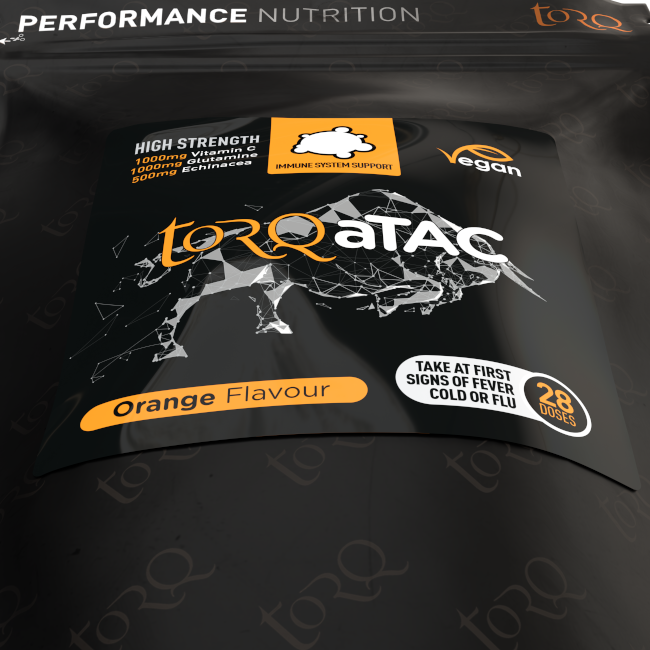
We recommend that you routinely take onboard 1000 IU of vitamin D daily all year round along with 15mg zinc. Alongside a healthy balanced diet, these will go a long way towards supporting your overall immune system. A moderate daily dose of our TORQ aTAC product can be taken in the short term if you feel particularly vulnerable to infection – for instance if you’re travelling or attending a social function. Follow the mega-dosing protocol outlined on the TORQ aTAC pack if you are struck down by illness and stop training immediately.
Quality Nutrition for Quality Training
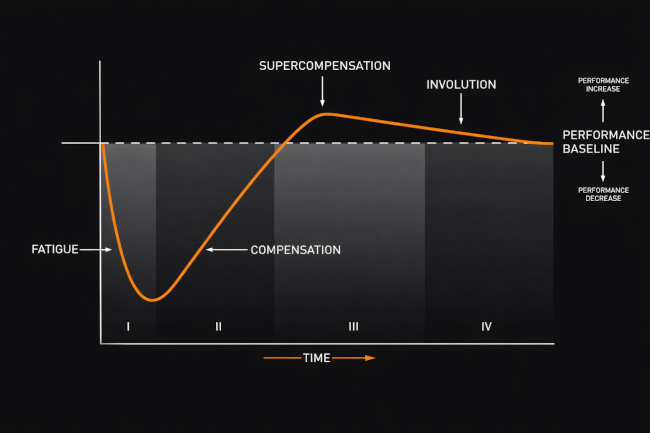
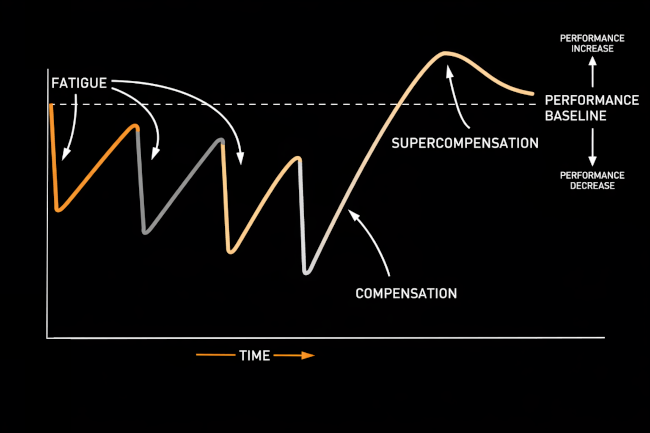
The human body is exceptionally complex and regulated by numerous mechanisms to maintain homeostasis, or balance. When we complete training, the aim is to disrupt this balance, stressing the body and inducing fatigue. While fatigue is often viewed as a negative byproduct of training, it is fundamental to adaptation. Referring to the graphic below, the fatigue generated by the training session (Phase I) will result in adaptations specific to the type of training completed.
For example, if you complete a 2-hour endurance training run (Phase I), this will have stressed all the processes involved in driving the aerobic cardiovascular system. Once you have allowed some time to recover from the training (Phase II) we would expect to see aerobic-specific training adaptations starting to develop. Once fully recovered and adapted, you will now find yourself carrying a new heightened degree of fitness (Phase III).
The key to successful training is all about taking advantage of these heightened levels of fitness and then generating a new fatigue stimulus, as demonstrated in the diagram below.
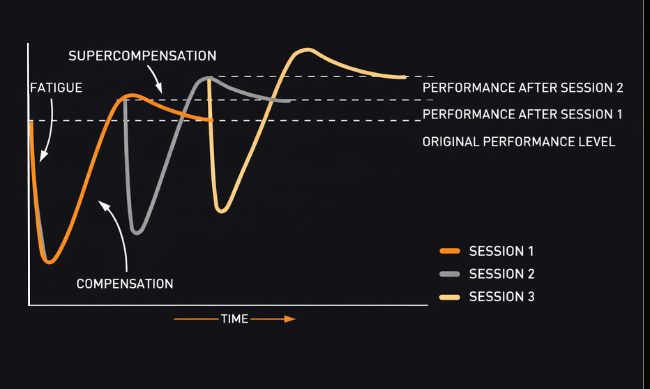
This cycle depends on nutrition:
- Train hard
- Fuel well
- Recover properly
- Adapt stronger
Eating the right food is not a luxury, it is a performance tool. Balanced meals containing sufficient carbohydrate, protein, and fat throughout the day provide the building blocks needed to repair, recover and improve. Sometimes this means eating more carbohydrates than you expect, but when food is viewed as fuel rather than something to earn, training gains follow.
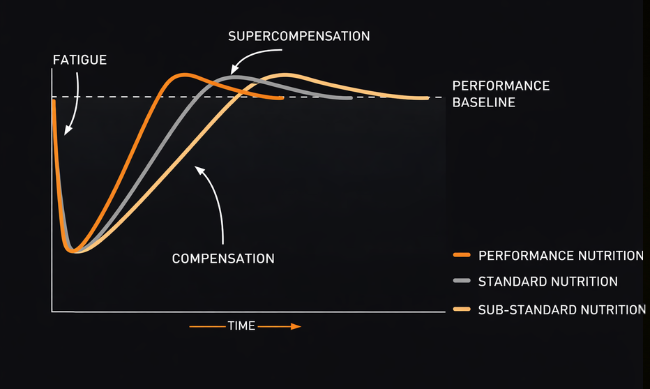
This is where the TORQ Fuelling System comes in. During long or intense sessions, the simple and structured TORQ Fuelling System provides measured doses of carbohydrate to match work rate:
- 1 TORQ Unit, 30g per hour, for light training
- 2 TORQ Units, 60g per hour, for longer runs
- 3 TORQ Units, 90g per hour, for high demand sessions
Fuelling with TORQ during training helps preserve stored carbohydrate, delay fatigue and build confidence that your gut can handle the demands of the event.
Post session, consuming a high-quality Recovery Drink immediately after exercise delivers a high dose of protein alongside carbohydrate and is one of the most effective interventions you can make to accelerate recovery. The faster you recover, the sooner you can train again and the greater your fitness gains before marathon day.

The video (and previous discussion in this article) highlights how important it is to continue to consume high quality calories (protein and carbohydrate) throughout the day as all of this plays a vital role in your physical recovery and overall health. Remember to consume 20-25g of protein every 3-4 hours and maintain a high carbohydrate diet.

To learn more about the interaction between training and nutrition, we highly recommend reading our Optimal Nutrition article. Also, if you haven’t read our Immune System Support Resources yet, we strongly advise that you do. They explain how consuming carbohydrate during and immediately after exercise helps with immune function and there’s nothing more likely to cause regression in your training than illness. It’s so important that you keep yourself healthy.
You can learn more about Effective Training in this article. Also, if you would like to learn more about how to prepare, train and peak for your marathon, please take the time to read our Periodisation & Peaking series of articles:
Periodisation & Peaking 1: The Off Season
Periodisation & Peaking 2: Planning Your Training
Periodisation & Peaking 3: Peaking For Competition
How to Fuel Your Training Sessions
At low exercise intensities, both fat and carbohydrate contribute to energy production. As intensity increases, the contribution from carbohydrate increases until it becomes the predominant fuel source. In short, the harder we exercise the more carbohydrate we burn and the more we need to consume. You will notice at 70% of our aerobic capacity, carbohydrate becomes the predominant fuel source, and this is called the aerobic fuel utilisation crossover. The take home message: carbohydrate consumption is key at all exercise intensities.
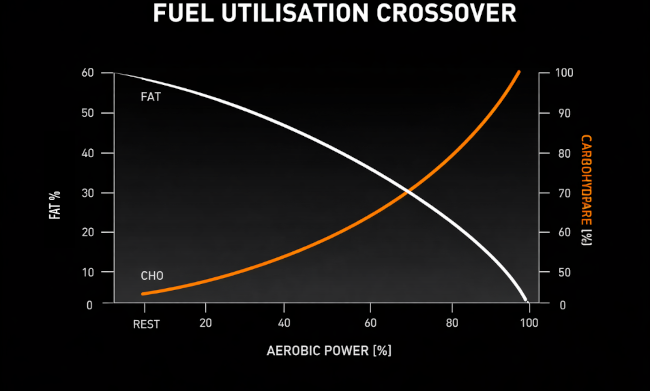
The way to avoid running out of fuel or delay the dreaded ‘hitting of the wall’ is to fuel with carbohydrate whilst exercising. The Why Fuel video below highlights the importance of fuelling for runners and demonstrates how taking on carbohydrate fuel sources (exogenous fuel) helps to preserve your stored carbohydrate (endogenous fuel). Please take the time to watch it, because it explains the topic far better than we ever could with words. This is a very valuable video to watch.

Although the video refers to energy Drinks, Gels, Jellies and Bars for fuelling, marathon runners often choose to use gels only and take on water for hydration at the feed stations. Gels are extremely easy to consume whilst running and we would always recommend them as the primary fuel source. Jellies are often used in combination with Gels too, because 30g of carbohydrate can be delivered by grazing on this product over a longer period of time.
With the importance of fuelling now understood, the F.I.T.T principles will determine your day-by-day fuelling strategy and how you should choose to use the TORQ Fuelling System to guide your intake during sessions with 1, 2 or 3 TORQ Units per hour (30, 60, 90g or maybe even more carbohydrate).
The F.I.T.T principle is an acronym composed of the 4 methods used to manipulate your training load. These 4 methods include; Frequency (how many times per week you train), Intensity (how hard the session is), Time (how long the session is) and Type (sprint or endurance focused session).
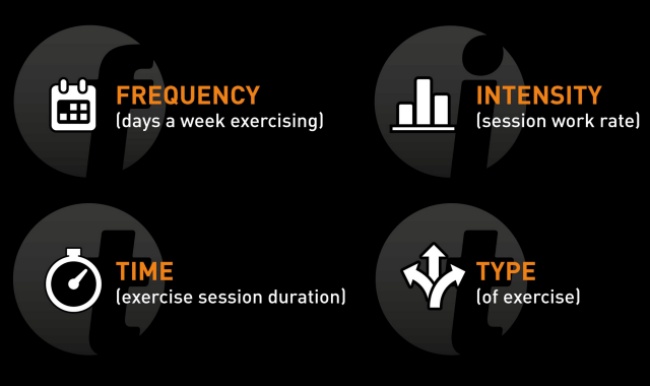
We have already discussed intensity and time, however the two principles yet to be considered are frequency and type. Regarding frequency, we may choose to schedule sessions back-to-back and strategically neglect recovery to generate a deep trough of fatigue, which (if a suitable period of recovery is planned) will generate a significant amount of adaptation.
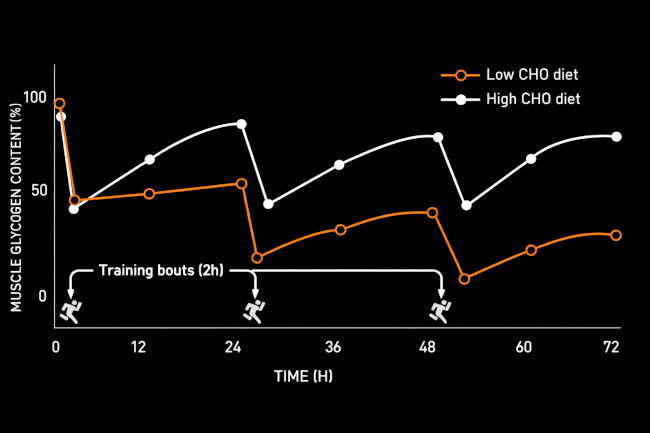
Back-to-back sessions, limited recovery windows and high training loads make fuelling during exercise essential. Preventing excessive glycogen depletion makes post exercise recovery easier and supports long-term adaptation. The graph below highlights the comparison between a high and low carbohydrate diet and how the two diets impact stored carbohydrate availability over multiple sessions. Interestingly, the same graph could equally represent our performance within each session. As carbohydrate starts to deplete, we will almost certainly see a reduction in our ability to perform.
Not every session requires fuelling. Short, low intensity recovery runs carry minimal risk of depletion. Some athletes may experiment with Fasted Training, but this should be approached carefully and with knowledge. If you’re interested, read our article on the subject HERE. If unsure, we strongly advise that you stick to the principles outlined in this article.
Every session has two nutritional goals:
1. Supply enough energy before and during exercise to meet session demands
2. Provide carbohydrate and protein immediately afterwards to support recovery
Practicing fuelling early in training program allows you to train your gut and remove uncertainty. When you can comfortably absorb 90g per hour in training, event day fuelling becomes a strength rather than a concern. That said, don’t feel you need to push to 90g carbohydrate (3 TORQ Units) per hour, 60g (2 TORQ Units) per hour is perfectly acceptable and will give you a much stronger performance than most.
The Art and Science of Carbohydrate Loading
Your muscles can only store so much carbohydrate, but you can maximise those stores. Carbohydrate Loading is a strategic increase in carbohydrate intake before particularly long or demanding sessions. Completing an exhaustive 3 minute effort after a warm up primes your body to absorb more carbohydrate. You should also increase the amount of carbohydrate within your daily diet to around 70-80% of your daily intake. Starting hard or long sessions with low glycogen stores increases the likelihood of hitting the wall or missing your training targets, particularly as carbohydrate burn rates can exceed absorption limits. Finally, stay hydrated! To store 1g of glycogen, 3 grams of water is required, so ensure you drink plenty of water.

- Increase carbohydrate to 70 to 80 percent of daily intake
- Combine complex and simple carbohydrate sources
- Maintain hydration, as storing 1g of glycogen requires 3g of water
- After a warm up, complete exhaustive 3-minute exercise interval
To overcome this you will need to consider incorporating some simple carbohydrates such as jelly babies, wine gums, flavoured rice cakes (sweet or savoury) or even snack on a TORQ Bar or Explore Flapjack. You could also try adding the neutral-tasting TORQ Energy Organic to food and drinks to boost their carb content – it’s called ‘the invisible calorie.’ You can learn more about the intricacies of carbohydrate loading by clicking HERE.

Hydration: More Than Just Water
Hydration plays a key role in both mental and physical performance. Dehydration affects cardiovascular function, thermoregulation, mental focus and carbohydrate absorption, all of which significantly impair performance. Sweat losses also include electrolytes such as sodium, potassium and magnesium. TORQ Hydration Drink replaces these losses in a formulation designed to support absorption and maintain balance during longer runs and recovery, particularly in warmer conditions.

Look at the short video below. Although the tone of this video is perhaps directed more towards actual marathon day, the principles of fuelling and hydration remain the same. Please note that TORQ Hydration Drink is the new name for TORQ Hypotonic, which is referenced in this video – the product formulations are exactly the same.
Hydration is a hugely important topic and we encourage you to take the time to read our definitive Hydration Guide where we leave no stone unturned on the subject.
Putting It All Together: A Weekly Fuel Plan
Understanding nutrition is one thing. Applying it consistently, day after day, alongside marathon training is where results are earned. This is where structure matters and where the TORQ Fuelling System becomes such a powerful tool.
Rather than guessing how much to eat, when to eat it, or whether you’re “doing enough,” the TORQ range allows you to build a repeatable, reliable routine that supports training quality, recovery and long-term adaptation.
Morning
Breakfast with carbohydrate + protein
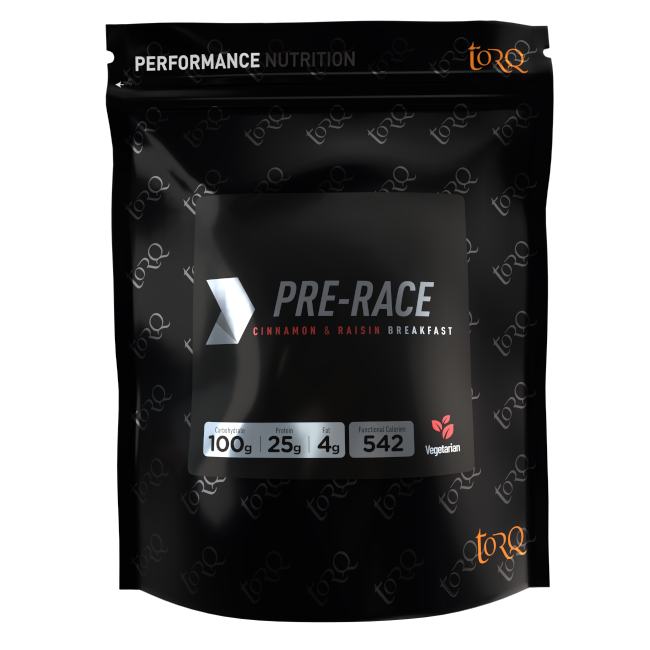
(e.g. TORQ Performance Breakfast, delivering 25g high-quality protein)
Light snack before easy runs
(e.g. TORQ Flapjack or TORQ Energy Drink if required)
During Runs
Take on TORQ Fuelling System based on session demand
(1, 2 or 3 TORQ Units per hour via TORQ Energy Gels, Bars and Jellies)
Hydrate with water or TORQ Hydration Drink as required
After Runs
Recovery Drink within 30 minutes
(e.g. TORQ Recovery Drink, providing carbohydrate and 20–25g protein)
Balanced meal within 2 hours
(whole-food meal supported by adequate carbohydrate)
Throughout the Day
Regular protein every 3–4 hours
(e.g. TORQ Performance Meals or protein-rich meals)
Plenty of fresh fruit and vegetables for micronutrients
(supported where appropriate by TORQ Immune System Support products)
Conclusion: Confidence Through Strategy
Training for a marathon rewards consistency, patience and smart choices.
You now know that carbohydrate fuels performance, protein supports repair, fat supports health, micronutrients matter and hydration is essential. Preparation beats panic. Plan, practice and trust your strategy. You are not guessing. You are prepared. You are not hoping for your best. You are building it. And when event day comes, you will be ready.
In summary therefore:
- Carbohydrate is performance fuel — The TORQ Fuelling System gives you a practical way to manage it.
- Protein builds and repairs — eat consistently throughout the day.
- Fat supports health — not a performance fuel but supports general health.
- Micronutrients matter — keep a variety of whole foods in your diet.
- Hydration — is key to performance and not an afterthought.
- Preparation beats panic — plan, practice and trust your strategy.

Trying TORQ?
If you’re interested in purchasing TORQ products, we strongly advise training with them first, so that you can be 100% confident with your marathon day strategy. The easiest way to sample our products is to choose individual items from our ‘Build a Sample Pack’ page on this website:
Alternatively, TORQ products are widely available from the following stores:
Runners Need
Up & Running
Run4it
Inov8
Northern Runner
Accelerate UK
Running Form
Sainsburys (selected stores)
TORQ Podcast
If you enjoyed reading this article, why don’t you listen to our podcast on the subject?
Apple Podcast: Click HERE
Spotify Podcast: Click HERE
YouTube Podcast: Click HERE or hit ‘play’ below.

If you have any questions about this article or any other subject, please don’t hesitate in contacting us at enquiries@torqfitness.co.uk or phone 0344 332 0852.